Introduction
Breast implant surgery is one of the most popular cosmetic surgical procedures performed to enhance breast size, shape, symmetry, and overall body contour. The procedure involves placing specially designed implants inside the breasts to create fuller and more proportionate breast appearance. Breast implant surgery may also be performed as part of breast reconstruction following mastectomy, trauma, or congenital breast deformities.
Many women choose breast implant surgery to improve self-confidence, restore breast volume lost after pregnancy or weight loss, correct asymmetry, or achieve desired body proportions. Advances in modern cosmetic surgery have made breast augmentation safer, more customizable, and capable of producing natural-looking results with improved implant technology and surgical techniques.
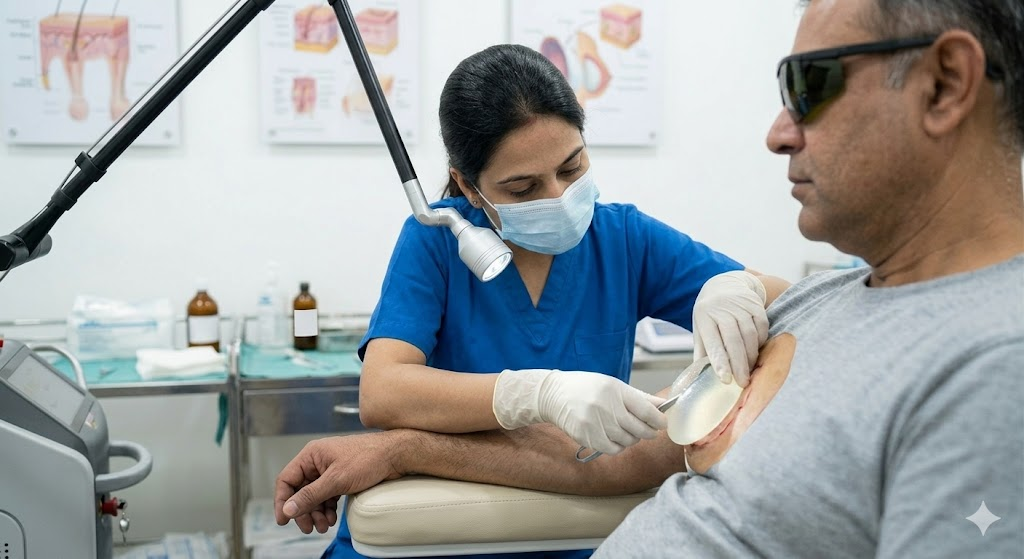
Breast implants are available in different shapes, sizes, textures, and materials, allowing surgeons to create highly personalized treatment plans according to each patient’s anatomy and aesthetic goals. Modern breast implant surgery focuses not only on increasing breast size but also on improving breast contour, projection, cleavage, and overall harmony with the body.
Whether performed for cosmetic enhancement or reconstructive purposes, breast implant surgery can significantly improve body image and emotional well-being when performed by experienced cosmetic or plastic surgeons.
What Is Breast Implant Surgery?
Breast implant surgery, also known as breast augmentation or augmentation mammoplasty, is a surgical procedure designed to enhance breast volume and shape using medical-grade implants.
The procedure helps:
- Increase breast size
- Improve breast symmetry
- Restore breast fullness
- Enhance body proportions
- Improve breast contour
- Boost self-confidence
Why Women Choose Breast Implant Surgery
Women choose breast implant surgery for various cosmetic and reconstructive reasons.
- Naturally small breasts
- Breast asymmetry
- Volume loss after pregnancy
- Changes after breastfeeding
- Weight loss-related breast deflation
- Age-related breast volume reduction
- Post-mastectomy breast reconstruction
- Correction of congenital breast deformities
Types of Breast Implants
Several types of breast implants are available depending on patient preference, body structure, and desired outcome.
Silicone Implants
Silicone implants are filled with cohesive silicone gel that closely resembles the feel of natural breast tissue. They are among the most commonly used implants because of their soft and natural appearance.
Saline Implants
Saline implants are filled with sterile saltwater solution. These implants can be adjusted during surgery and are absorbed naturally by the body if rupture occurs.
Gummy Bear Implants
Gummy bear implants contain highly cohesive silicone gel that maintains shape even if the implant shell is damaged. These implants provide excellent shape retention and natural contour.
Implant Shapes
- Round implants
- Teardrop-shaped implants
- Anatomical implants
- Smooth implants
- Textured implants
Benefits of Breast Implant Surgery
Breast implant surgery offers several cosmetic and emotional benefits.
Cosmetic Benefits
- Fuller breast appearance
- Improved body proportions
- Better cleavage definition
- Enhanced breast symmetry
- Youthful breast contour
- Improved clothing fit
Emotional Benefits
- Improved self-confidence
- Enhanced body image
- Greater comfort in social settings
- Improved feminine appearance
- Restoration after breast loss
Advantages of Modern Breast Implants
- Natural-looking results
- Long-lasting outcomes
- Advanced implant safety
- Customizable treatment options
- Improved surgical techniques
Who Is an Ideal Candidate?
Breast implant surgery may be suitable for women who:
- Desire larger breasts
- Have breast asymmetry
- Lost breast volume after pregnancy
- Have realistic expectations
- Are physically healthy
- Seek body contour enhancement
- Need reconstructive breast surgery
Pre-Surgical Consultation
A detailed consultation is important before breast implant surgery to determine the most suitable implant type and surgical plan.
- Breast examination
- Body proportion analysis
- Medical history review
- Discussion of desired breast size
- Implant selection
- Assessment of skin quality
- Discussion of surgical risks and expectations
Preparation Before Surgery
Proper preparation helps improve surgical safety and recovery.
- Avoid smoking before surgery
- Stop certain medications if advised
- Maintain healthy nutrition
- Arrange post-surgery support
- Complete recommended medical tests
Procedure of Breast Implant Surgery
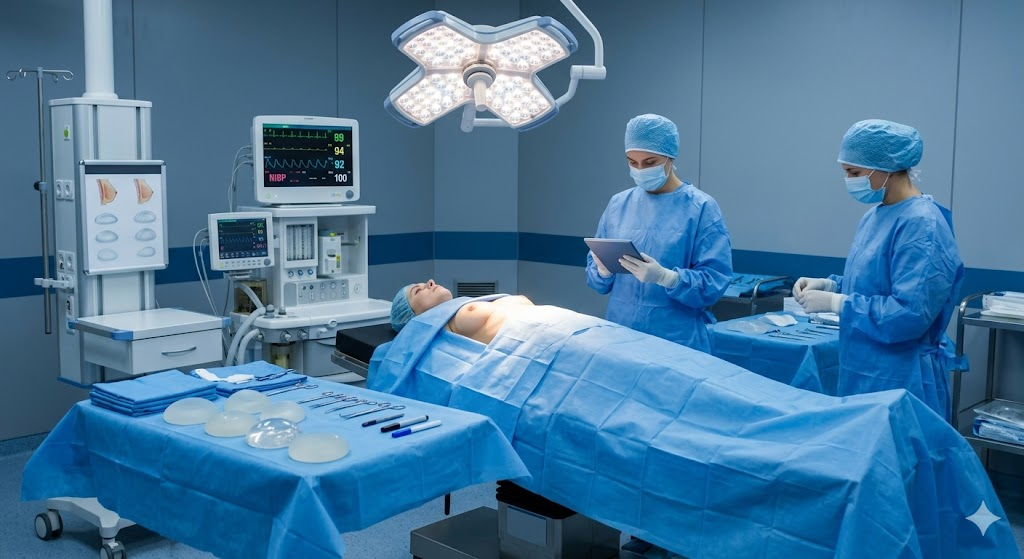
Breast implant surgery is usually performed under general anesthesia and may take one to three hours depending on the surgical technique used.
During the procedure, the surgeon creates carefully planned incisions to place the implants in the desired position.
Common Incision Locations
- Under the breast fold
- Around the areola
- Under the armpit
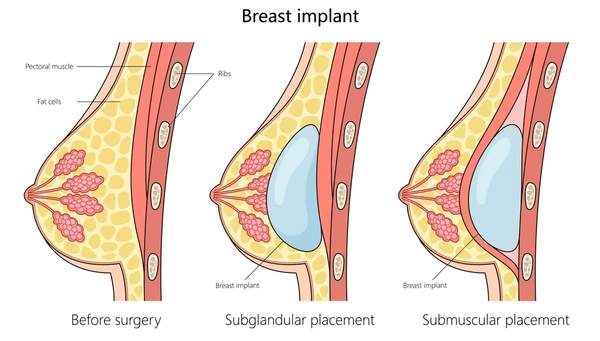
Implant Placement Options
- Above the chest muscle
- Below the chest muscle
- Dual-plane placement
After implant placement, the incisions are carefully closed, and supportive dressings or surgical bras are applied.
Recovery After Breast Implant Surgery
Recovery varies depending on implant size, surgical technique, and individual healing response. Most patients can return home the same day or after a short hospital stay.
Common Temporary Effects
- Swelling
- Bruising
- Mild discomfort
- Tightness in the chest
- Temporary soreness
Most swelling gradually improves over several weeks, while final implant settling may take a few months.
Post-Surgery Care
- Wear supportive surgical bras
- Avoid heavy lifting initially
- Sleep on the back temporarily
- Follow medication instructions carefully
- Attend follow-up appointments
- Avoid smoking during healing
Breast Reconstruction with Implants
Breast implants are commonly used in reconstructive surgery following mastectomy or breast trauma. Reconstruction helps restore breast shape and improve emotional recovery after breast cancer treatment or injury.
Reconstructive breast surgery may involve implants alone or combination procedures with tissue flaps and fat grafting.
How Long Do Breast Implants Last?
Modern breast implants are designed to be durable and long-lasting. Many implants remain intact for 10 to 20 years or longer, although replacement may eventually be required depending on implant condition and patient preference.
Regular follow-up examinations help monitor implant health and maintain long-term results.