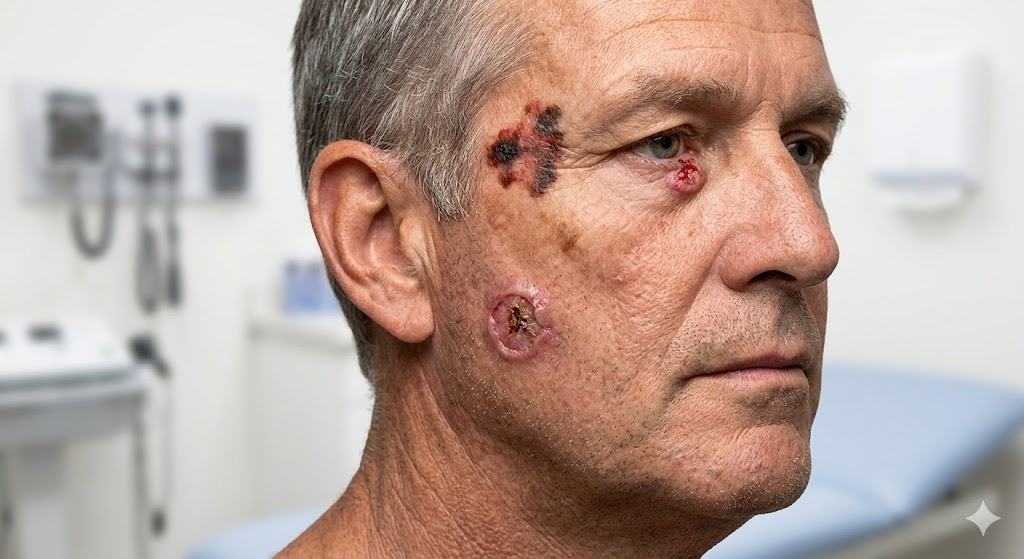
Facial Cancers – Types, Symptoms, Diagnosis & Treatment
Facial cancers are abnormal and uncontrolled growths of cells that develop on the skin, soft tissues, bones, or glands of the face. These cancers can affect the lips, cheeks, nose, eyelids, scalp, jaw, oral cavity, and surrounding facial structures. Early detection and timely treatment are extremely important because facial cancers can spread rapidly and may affect both appearance and vital functions such as speech, eating, breathing, and vision.
Modern cancer treatment combines surgical oncology, plastic and reconstructive surgery, radiation therapy, and advanced medical care to achieve the best possible outcomes while preserving facial appearance and function.
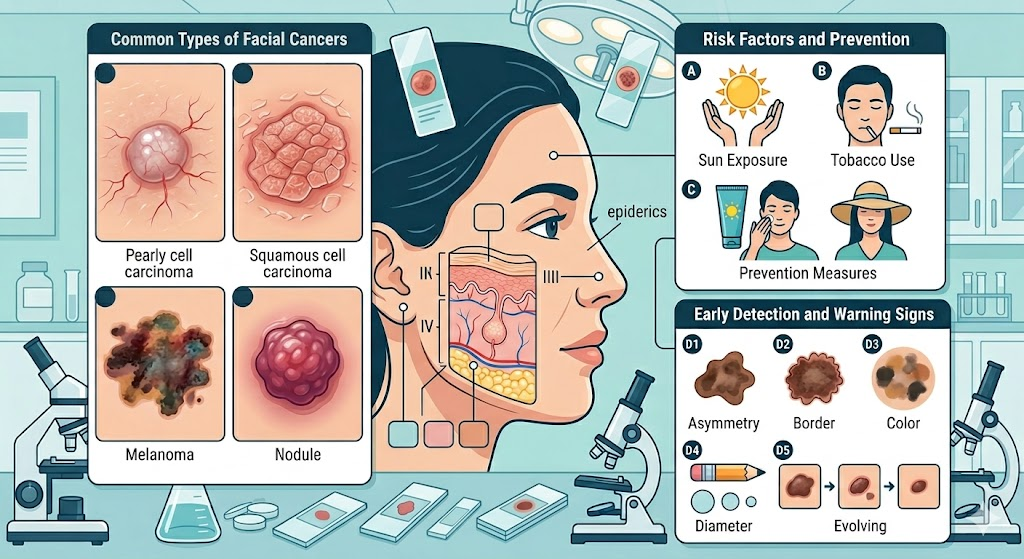
What are Facial Cancers ?
Facial cancers refer to malignant tumors occurring on the face or nearby structures. They may arise from:
- Skin cells
- Mucosal lining
- Salivary glands
- Bones
- Connective tissues
- Nerves or muscles
Some facial cancers grow slowly, while others are highly aggressive and invasive.
Common Types of Facial Cancers
- Basal Cell Carcinoma (BCC)
- Squamous Cell Carcinoma (SCC)
- Melanoma
- Oral and Lip Cancer
- Salivary Gland Tumors
- Bone and Soft Tissue Tumors
Recovery After Treatment
Recovery depends on:
- Cancer stage
- Type of surgery
- Overall patient health
Patients may need:
- Wound care
- Speech therapy
- Nutritional support
- Physiotherapy
- Psychological counseling
Symptoms of Facial Cancer
Common warning signs include:
- Non-healing ulcers
- Persistent facial swelling
- Bleeding skin lesions
- Painful sores
- Facial asymmetry
- Difficulty chewing or swallowing
- Change in mole appearance
- Numbness or weakness
- Enlarged neck lymph nodes
- Persistent mouth ulcers
- Persistent mouth ulcers